What made you decide to build a house using EUROPANELfor your first construction project, and what was the main reason behind your decision?
There are a large number of wooden houses on the Czech market, and few people can figure out which type of construction is best for them; terms like “diffusion-open” or “closed” construction usually mean nothing to the layperson. My first house built with Europanel was a bit of a gamble, but the references and visits to buildings constructed using the Europanel system convinced me, so I built my house with Europanel. It wasn’t until after the first winter that I realized, thanks to the heating system using a heat pump, that the costs for heating, cooking, and lighting were wonderfully low. The first house had about 150 square meters of living space, and the costs for a family of four were 1,900 CZK. I’d say the low operating costs are the main thing I like about the Europanel building system.
Unlike your first house, the subsequent construction of the LUPO XL house is based on ground screws. From a user’s perspective, can you compare a concrete foundation slab with a foundation above ground level?
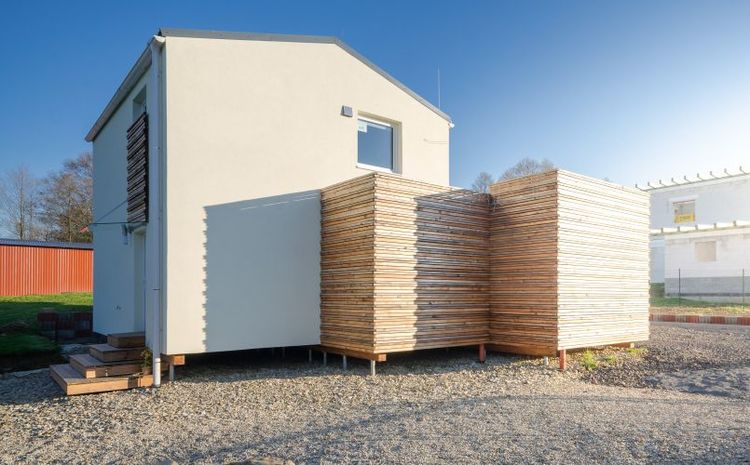
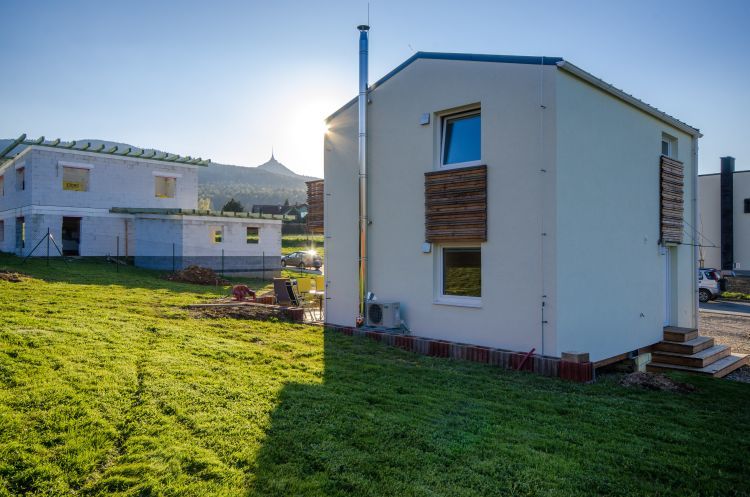
With the first project, “there was no rush,” so even the construction of a traditional foundation slab, which took two months, wasn’t a problem. The second LUPO XL house was a bit more urgent (moving out of expensive rent, the desire for a home of our own, etc.), which is why we chose the above-ground foundation option. My original plan was to build a NATURA SPACE house on a different lot, and I was thrilled by the model home built on ground screws. The planned lot was eventually sold, and the LUPO XL was a better fit for the new lot. The floors are very well insulated, whether with a traditional foundation slab or ground-screw foundations; you don’t feel the cold. The only question is how quickly one gets used to the different sound sensation, but everything can be resolved, for example with impact sound insulation.
How many months did it take to obtain the building permit and complete the construction of your LUPO XL house?
The building permit took 2 months, construction preparation and project documentation another 2 months, and the house was built in 4 months. It could have gone faster, but some supplies weren’t from the company that built the entire house, which is why it took 4 months.
Your house has a whole range of premium features. How satisfied are you with the EUROPANEL air ventilation system with heat recovery?
EUROPANEL air works amazingly well; it’s quiet and effectively removes “stale” air from the house while supplying fresh air. Cleaning is simple, and its installation doesn’t detract from the walls in the room where it’s located.
Would you recommend an air-to-air heat pump to our customers?
An air-to-air heat pump is the ideal heating solution for a LUPO XL-type home and also provides cooling during the summer months; energy consumption is minimal, and warm air distribution is ideal. Now, after the first bill following the first winter, the costs for heating, cooking, and lighting—thanks to the heat pump rate—amounted to 1,300 CZK for a household of three people. The standard electric space heaters were hardly used at all during the winter. Given the purchase price of around 50,000 CZK and thanks to the rate offered by the energy company, this is the ideal type of heating.
Another heat source in your home is the wood-burning stove. What is its output, and how do you use it in your low-energy home?
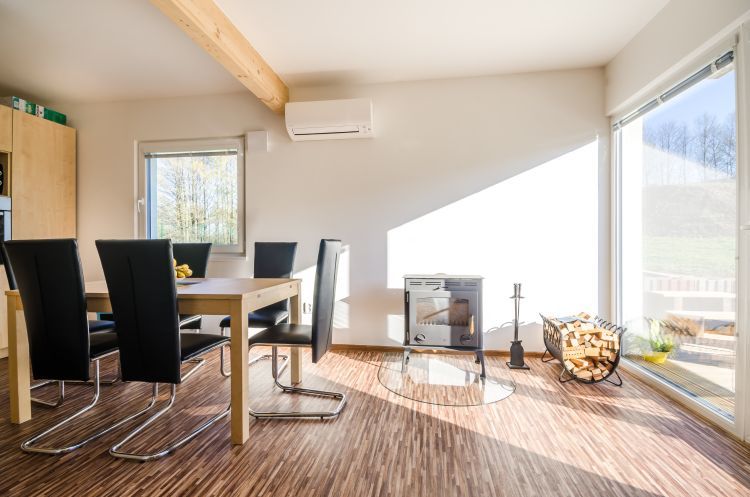
It is very difficult to find a wood-burning stove for a house with a heat output of around 4 kW, as most stoves have an output above 6 kW—which is like installing a LUPO XL sauna right in your living room. The output of the stove I purchased is adjustable from 2.2 kW to 6 kW, and it is most often set to around 3 kW.
Our customers often have to decide on the layout of their home—whether to have two or three rooms in the attic. What did you choose, and are you satisfied with this layout?
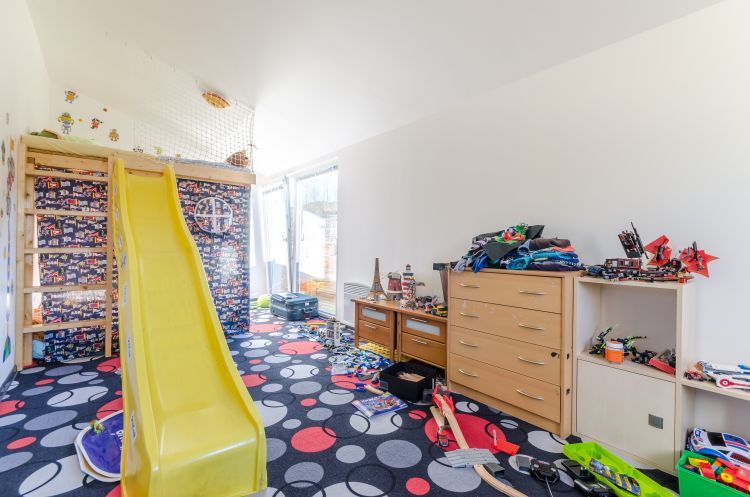
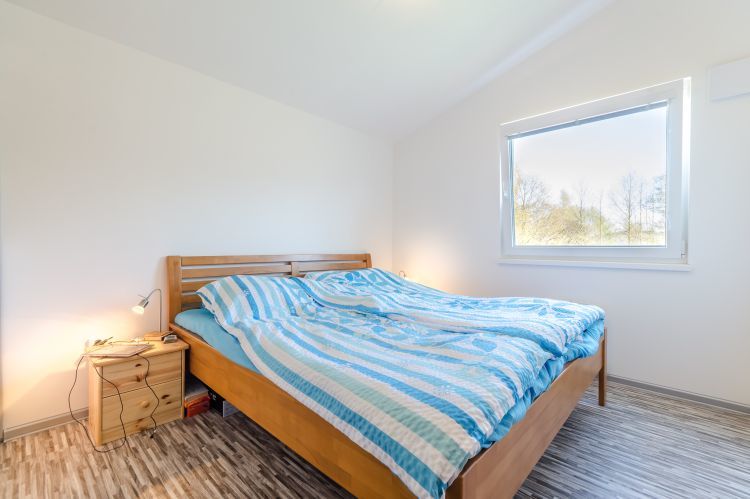
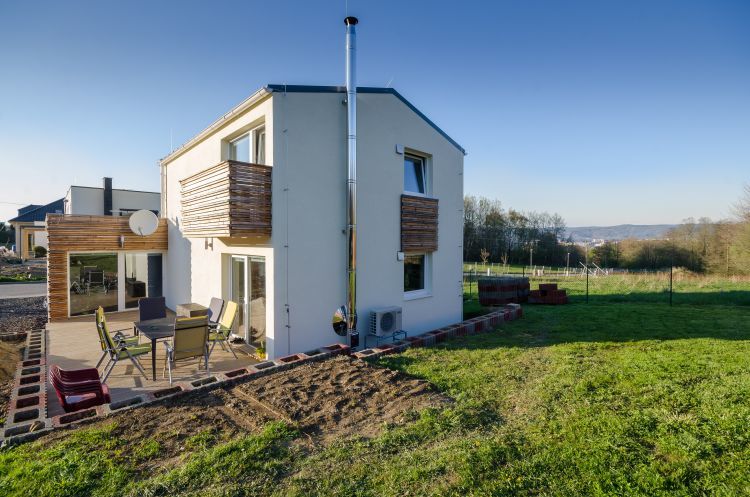
The attic is set up for three rooms in the future. I have two small children and my partner has one child; for now, they all share a room, and they even wanted a loft in it, so the space for sleeping and playing is expanded. My version of the house is ideal for a family of five; we spend most of our time on the terrace or in the garden anyway. Eventually, when the children want their own rooms, they can each have one; dividing the large room is just a matter of installing a drywall partition and adding a door to the upper hallway—the rest (electrical and heating systems) is already in place. And when I don’t feel like going upstairs, I’ve planned a shower stall and a modular extension in the lower unit, where I plan to eventually have a bedroom; right now, it’s a playroom for the kids.
Another premium feature of your home is the separate room module connected to the house by a connecting hallway. How do you like the ground floor layout with this module added?
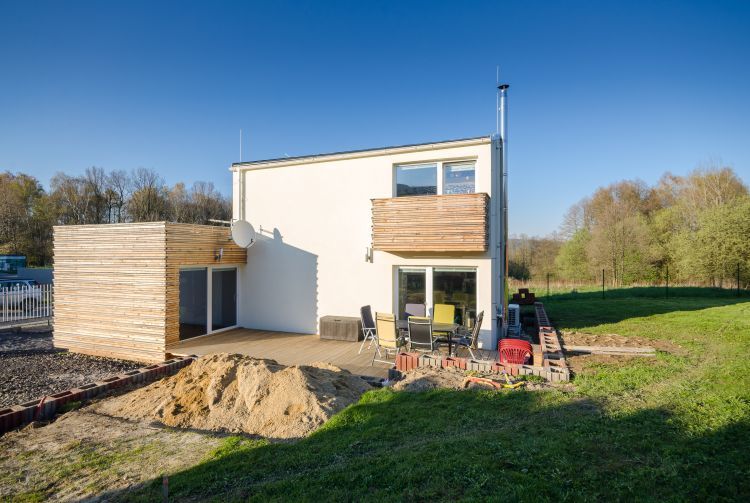
The module is a practical addition to the house; there is a walk-in closet in its hallway, and the module itself, together with the house, forms an ideal L-shaped layout, separating the terraces so they don’t face directly onto the street, for greater privacy.
The house was built using the LIGHT BUILDING construction method, which is based on eliminating wet processes and a prefabricated utility core. Are you satisfied with the quality of the utility core, and would you recommend LIGHT BUILDING to our customers?
The core was delivered to the site fully assembled from the factory, and it’s an amazing innovation in timber construction. Everything was carefully prepared, with water and electrical systems pre-configured for the entire house; electricians and builders had everything laid out on plans, making their work wonderfully straightforward.
Windows are an important energy-efficiency feature. You chose triple-pane plastic windows. What was the reason?
I had triple-pane windows in my first house as well, and I think they’re simply a must for a low-energy home; heat loss through glazed surfaces can be significant, but that’s not the case with triple-pane windows.
What flooring did you choose for the ground floor and the second floor?
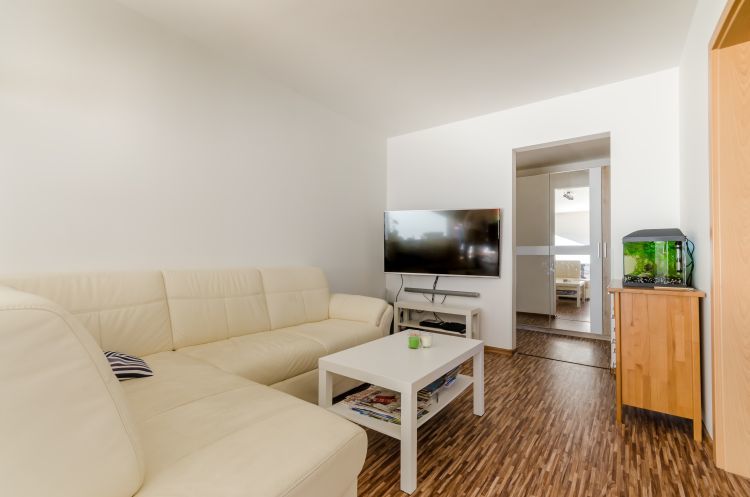
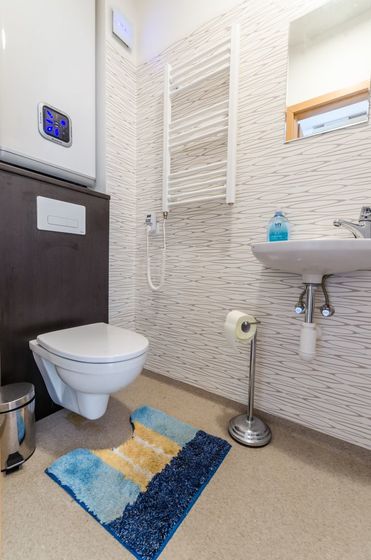
Linoleum, which looks like laminate flooring, is used throughout the house for easy maintenance; with frequent foot traffic even without changing shoes, it’s an ideal surface for cleaning and, over time, a good base for potential laminate flooring. The only exception is the carpet in the children’s room, which is warm for small children to play on the floor, where they spend most of their time.
Is there anything you would change?
I described the changes for old age above; another interesting option is swapping the kitchen for the living room—it all depends on the users’ perspective. As for me, the layout of the house suits me perfectly; I spend most of my time on the terrace from spring to fall.