

 The Europanel building system is a purely Czech product. The core element of this building technology is a structurally engineered insulated panel without an internal frame, whose load-bearing component is a shell made of large-format wood-based panels stabilized by a polystyrene insulation core. The core of the panel must be sufficiently strong, as the panel contains no additional stiffening elements. This construction results in a very strong building component.
The panel has a 42 mm deep mounting groove around its entire perimeter, formed by the OSB boards overlapping the polystyrene core, which is used to join the panels. The OSB boards are 12 mm or 15 mm thick, depending on the panel type.
Standard panels are available in six thicknesses, four lengths, and four widths. The panels are manufactured in various strength, insulation, and installation configurations depending on the intended use.
The panels can be cut to smaller sizes, extended, and have holes cut into them.
The Europanel building system is subject to European ETA certification with CE marking and is inspected twice a year during production by a European certification agency.
All types of panels in the Europanel building system, including individual structural configurations, are certified for the required fire, structural, and acoustic parameters according to their intended use.
We have prepared all necessary documentation, including structural details, for the design and construction of building structures.
WALL CONSTRUCTION
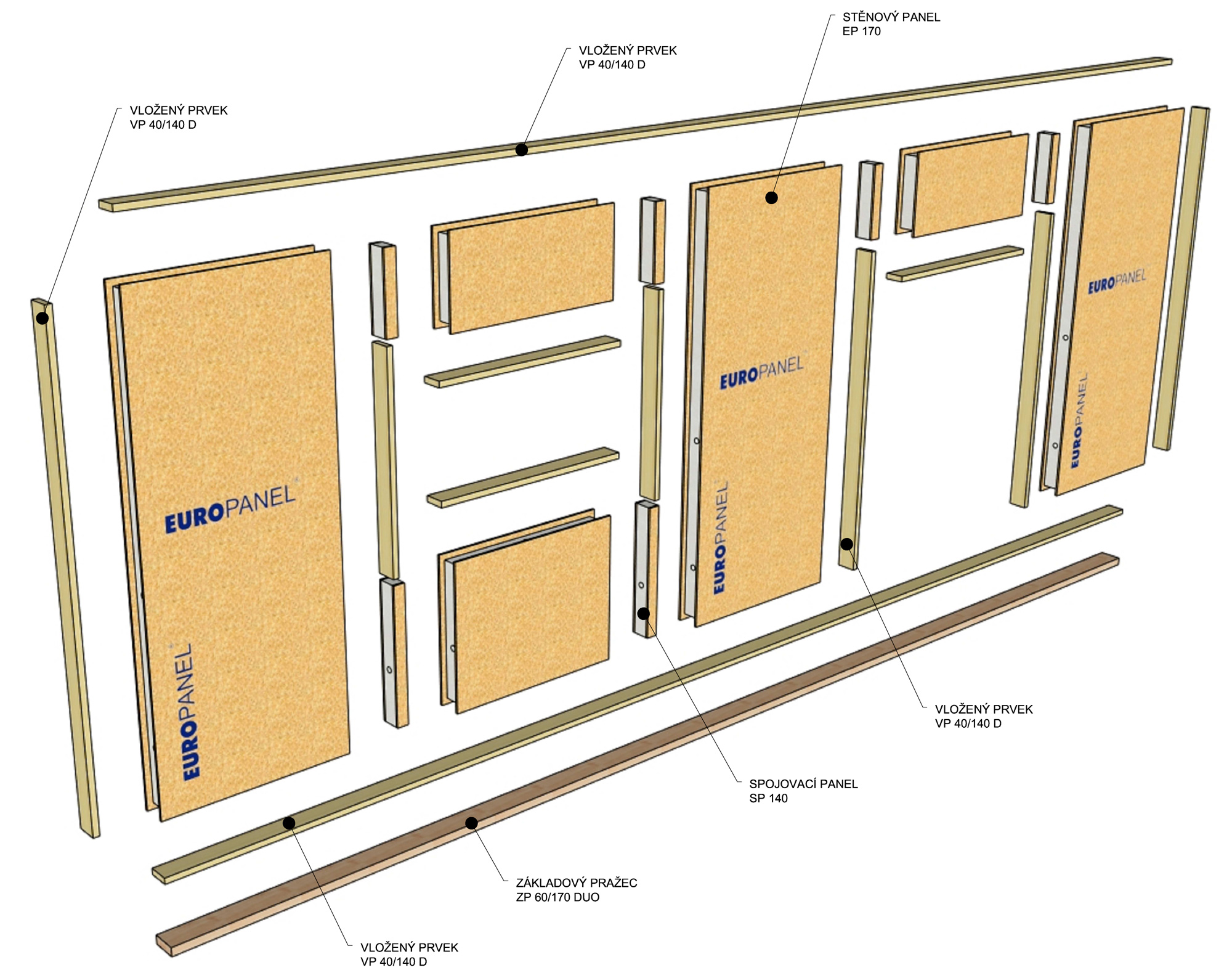
Construction using the Europanel building system
Since these are flat building components manufactured industrially with high precision, the structures themselves are also very precise.
Europanel system panels are used to construct all load-bearing structures of superstructures or parts thereof (walls, floors, roofs, and staircases). The versatility of the panels simplifies building design and construction logistics.
A single panel type for vertical, horizontal, and sloped structures simplifies the work of installation crews, reduces the training and qualification requirements for them, while maintaining high construction quality. This “dry construction” technology requires no special equipment on the construction site or for the installation crews.
Foundation work

Houses assembled from Europanels are most often built on a concrete foundation slab equipped with waterproofing or, if necessary, radon insulation. The positions of the individual walls are marked on the slab according to the assembly documentation. The panels are placed on a foundation sill that aligns with the edge of the foundation slab and, together with a wooden insert that defines the panel’s position, are anchored to the foundation slab using steel anchors.
An alternative foundation method involves constructing the foundation slab using panels placed on concrete strips, footings, or ground steel anchors. The spacing of the selected foundation structures always corresponds to the type of panel used. A larch BSH foundation beam is bolted to the concrete strips, footings, or ground anchors, and Europanel EP 270 floor panels are then bolted to this beam using panel screws.

Assembly of a single-story building
For a single-story building , panel installationbegins in one corner of the structure and continues by connecting additional panels around the perimeter. After completing the perimeter of the first above-ground floor, the load-bearing interior studs are assembled in a similar manner. The entire perimeter and the partitions are connected by inserting wooden elements into the assembly groove in the “crown” of the first above-ground floor. In the case of a single-story house, the panels are finished with an OSB distribution strip, the width of which corresponds to the thickness of the panel. A roof structure made of truss beams is then installed on the building constructed in this manner.
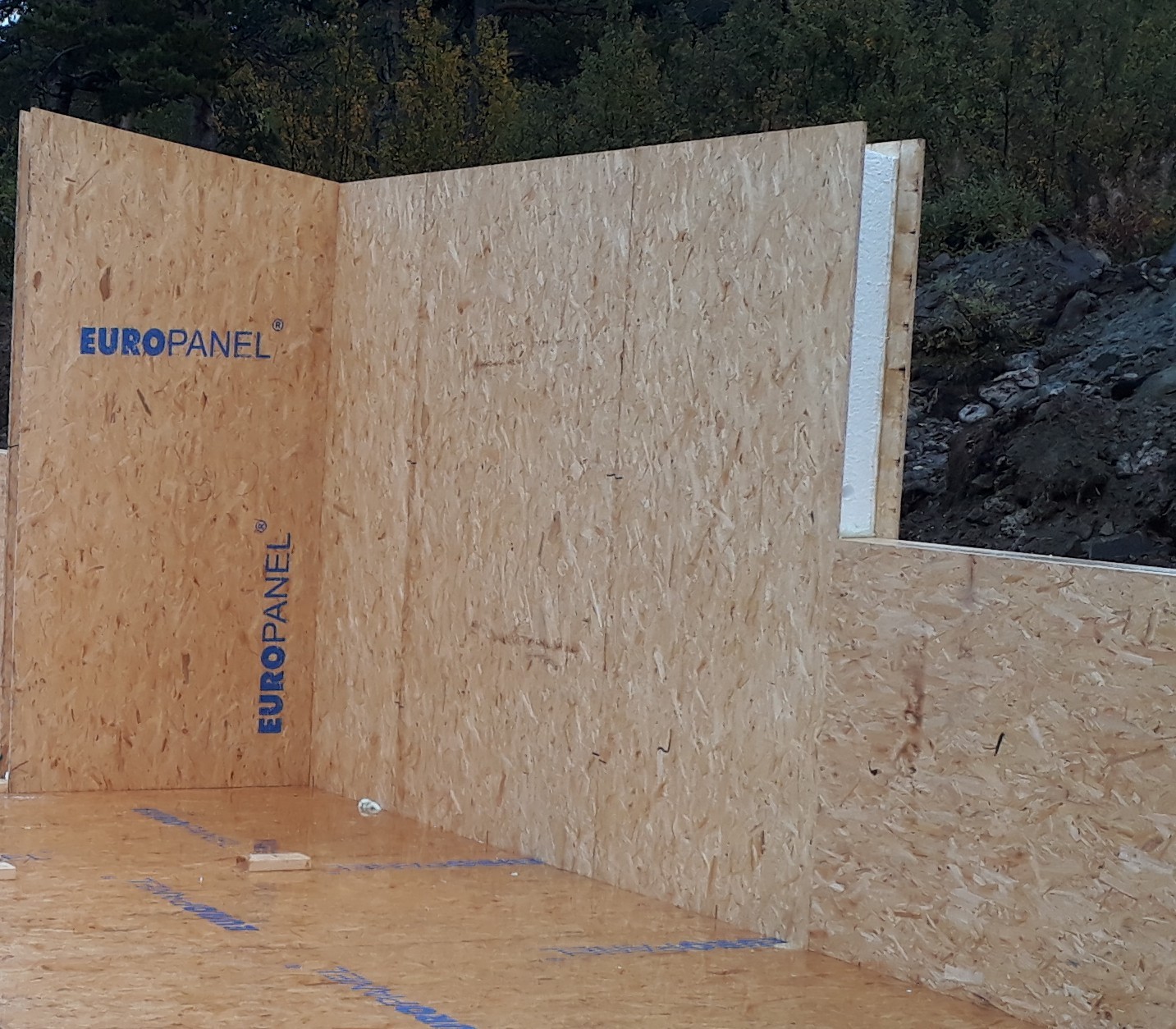
Assembly of a multi-story building

For multi-story buildings, construction continues with the ceiling. Ceiling beams are suspended from metal brackets attached to the inner panels. If larger spans are required, they are supported by a glued laminated timber girder supported by columns on adjustment footings. Ceiling beams are most commonly made of 60x240 mm adjustable-length wooden profiles or wooden I-beams. The floor of the second story is constructed from 22 mm thick OSB boards, which are tongue-and-groove joined and secured with screws through sealing strips into the ceiling beams and perimeter walls. A wooden insert defining the position of the second-story panels is placed on this floor. The installation of panels on the second floor is performed in the same manner as on the first floor.
Roof installation


The panels can also be used for the roof structure. This solution simplifies the roof framing, as the panels are supported by rafters only at the joints, i.e., at intervals of 2500–3000 mm.
Another advantage is that, in a single installation, the roof cladding is installed with insulation and is ready for the installation of the roof covering and the final interior finish.
Another benefit is the increased space in the attic, as the roof cladding insulation is located above the rafters. The structure is enclosed very quickly and protected against precipitation.
Completion of construction
Europanel shell structures are very well prepared for subsequent trades. They are assembled precisely; the walls are smooth, straight, vertical, and square. The entire structure incorporates safety features at individual joints and structural interfaces. Precise, clean openings with sill liners are prepared for window and door installation. The external insulation system is applied to the flat walls. All utilities are routed horizontally within floor, ceiling, or suspended ceiling assemblies. Vertically, installations are routed through drywall partitions and false walls, and circular channels with a diameter of 40 mm are provided in the panels for electrical cable runs.
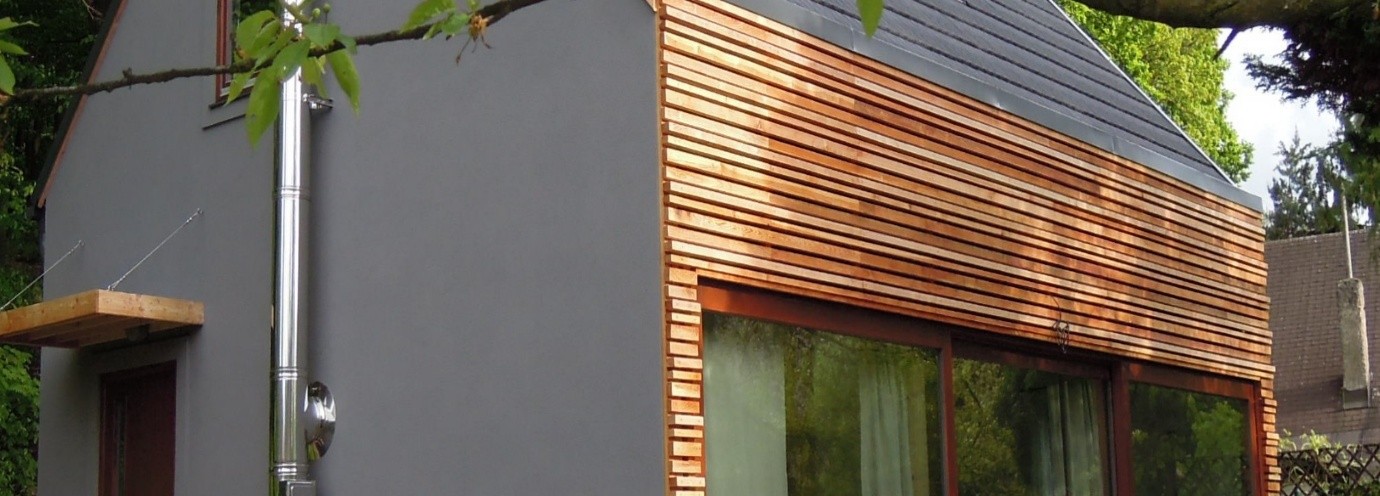
In most cases, the interior is finished with drywall panels; alternatively, gypsum fiber boards or false walls may be used. Floors on the first above-ground floor are poured concrete, or dry floor systems using various types of panels are employed. Floors on the second floor are constructed as “floating” floors, meaning a load-distributing board is laid over a material with good impact sound insulation, and the floor covering is laid directly on top of it; alternatively, poured floors may again be used.