

Panel production has moved to the Czech Republic
The rapid growth of panel production for timber-frame construction reached a stage where Christov & Unmack had to seek additional ways to keep production pace with demand. The choice fell on Bohemia, where another production plant was established.
In 1891, production began in the village of Buzendorf, today’s Boleslav. This location had the advantage of a sufficient supply of wood from the nearby Jizera Mountains and also provided a sufficient labor force, freed up from agriculture. Furthermore, orders for Austria-Hungary could be fulfilled without customs duties. In Bohemia, all variants of Döcker houses were manufactured, as well as hospital and school pavilions. For example, in 1912, the factory delivered 20 hospital pavilions to Buenos Aires. The plant in Boleslav was located away from the railroad, so a large transshipment hall was built in the neighboring village of Černousy in 1912. In 1915, the factory in Boleslav burned down, and production moved to Černousy. The factory in Černousy began operations the very next year.
After the war, prefabricated family homes were built
After World War I, production of large export orders was still winding down. Later, however, this production ceased entirely, and the factory in Černousy survived the difficult postwar years by focusing on the local market. From 1924 onward, single-family homes became the main product line of Christov & Unmack in Černousy. They were delivered and assembled by Christov & Unmack employees, or individual construction companies ordered them for their customers and subsequently carried out the assembly.
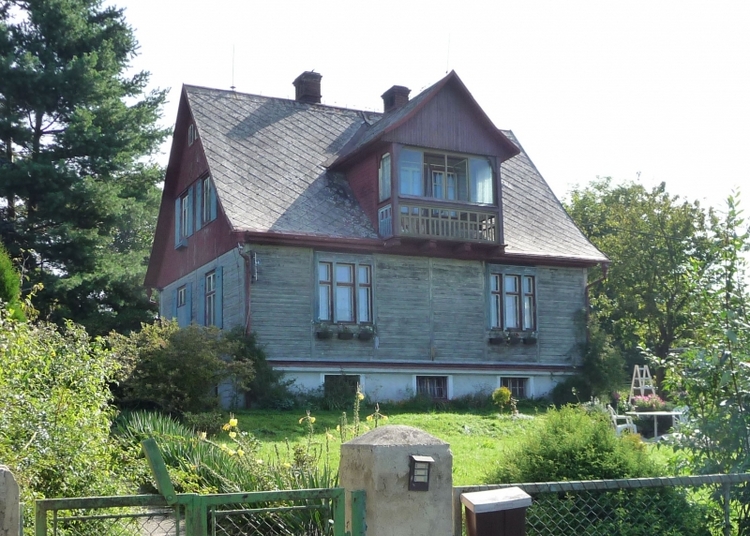
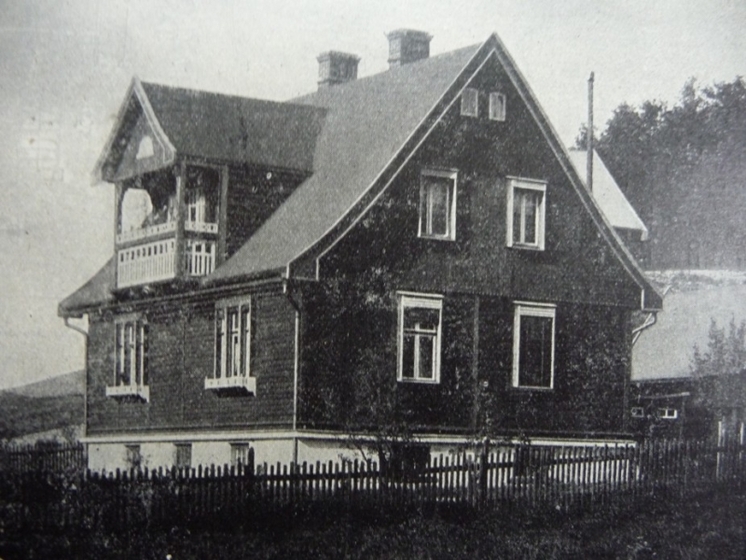
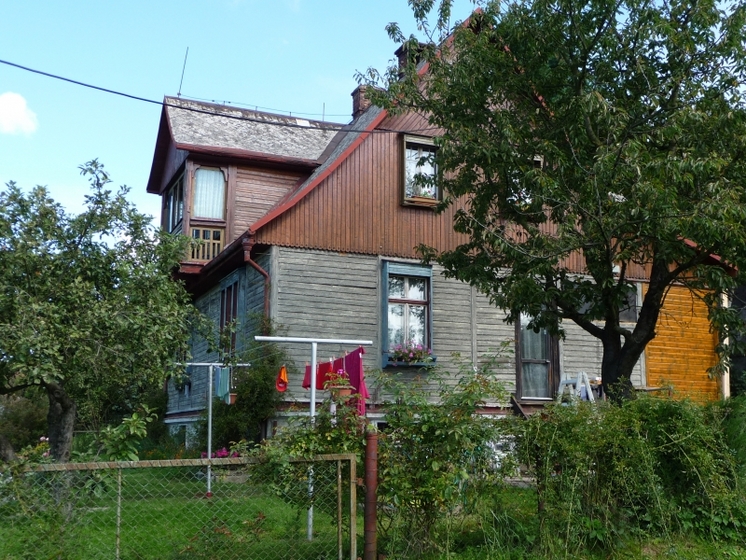
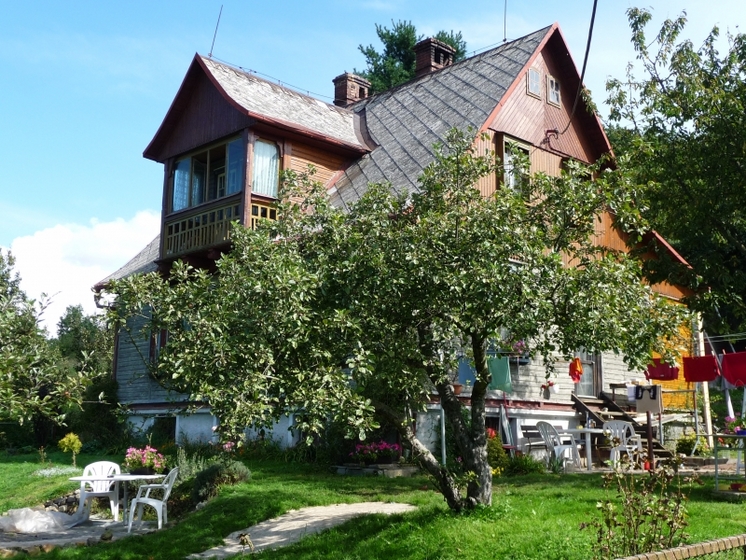
In the photographs, you can compare one of the factory’s first houses in Černousy. The house was likely built for the director of the Černousy factory. A photograph of it was published in Karel Kozlanský’s book from 1926. The second photograph shows the same house, taken in September 2010. The house has been in continuous use since its construction.
The war tarnished the reputation of the Černousy factory
After the Sudetenland was annexed to the Greater German Reich, the factory received contracts, new modern equipment, and was expanded to an area of 82,000 m². The construction of artificial lumber drying kilns represented a major technological advance. However, the wartime history of timber-frame buildings is very sad. In Germany and the occupied territories, more than 400 timber companies organized the production of houses for the German army, as well as for labor and concentration camps.
Prefabricated Wooden Buildings on the Path to the Modern Era
In the second half of the twentieth century, industrial production of panel timber buildings developed throughout virtually all of Europe. Modern panel construction materials, various types of thermal and acoustic insulation, modern fasteners and structural hardware, and, of course, construction chemicals entered the market. The original Döcker panel with mortise-and-tenon and dowel joints was increasingly replaced in the second half of the 20th century by a butt-jointed frame. The rigidity of such a panel is ensured by cladding the frame with a solid structural panel, usually wood-based. Different manufacturers vary in the size of the panels they produce, the degree of prefabrication, the degree of standardization, and the materials used. However, the basis of the panels remains the wooden frame, which Danish Captain Johann Gerhard Clement Döcker used for his houses in 1880, thereby effectively founding a new branch of the woodworking industry and construction.
Ing. Luděk Liška
EUROPANEL s.r.o.