

Today, prefabricated panel wood buildings account for the largest share of the wood building market in Europe. There are hundreds of companies that manufacture panels of various sizes, material compositions, and levels of finish. The diversity in panel technology is enormous. Upon closer examination, however, we find that prefabricated panel wood buildings are based on three fundamental structural principles of panels.
There are three structural principles for panels on the market:
- panels with a wooden frame
- structural insulated panels (SIPs)
- laminated all-wood panels
The designs are listed in chronological order of their development, with the wood-framed panel being the first. It is, however, interesting to observe how panel-based timber buildings have evolved and gained traction in the construction market. We are not just talking about the last ten, twenty, or thirty years.
The oldest construction principle—the wood-framed panel—was patented in 1880. Last year, it celebrated 130 years of existence. Wood-panel buildings became famous worldwide immediately after their inception, and the triumphant march of panel technologies across all continents has continued for three centuries. At one point, the Czech Republic was a world leader in this field.
Wars helped drive the development of prefabricated wooden buildings
In the 19th century, warring armies began to take a greater interest in the wounded and their treatment. General Staff physician Professor Christian Friedrich Stromeyer of Hanover, in his works “Maxims of the Art of War Medicine” from 1861 and “Gunshot Wounds” from 1867, identified thorough ventilation as “the primary requirement for successful wound treatment.” Efforts began to find a way to quickly erect and dismantle military field hospitals that would provide the
the best hygienic conditions for the wounded and that would also be usable during the winter months.
The First Prefabricated Wooden Structure
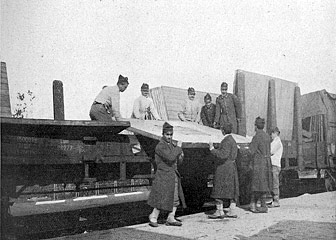
In 1880, Danish Captain Johann Gerhard Clement Döcker devised a system of panel structures featuring a wooden frame to which, according to sources, “pressed Döcker material” was attached—likely a precursor to lignate, i.e., fiber-cement boards. The vertical wall panels were joined using a latch-and-lock mechanism, and strips were attached to the panel joints with screws and wing nuts. The joint of the roof panels at the top of the building was secured with a special screw clamp. This allowed for quick and easy assembly and disassembly. The panels could be “stacked,” making them easy to store and transport. This system represented a major revolution in the construction of field hospitals and military hospitals. Döcker’s system was patented in 1880.
Panel-based wooden structures began to spread from Denmark
Production was taken over by the future Danish consul Christian Ferdinand Christoph and his partner, architect Christian Rudolf Unmack, who in 1882 obtained a license to manufacture Döcker’s mobile houses. The houses found widespread use across all military administrations and were highly valued for their practicality and usability. Prussian Surgeon General Dr. V. Coler of the Ministry of War in Berlin, when ordering the houses for the Prussian Ministry of War, insisted on moving production from Copenhagen, Denmark, to Germany. This occurred in 1882, when production began in Niesky (Upper Lusatia) at the machine factory of Mr. J.E. Christoph, the uncle of Ch. F. Christoph.
Panels as the best solution for military hospitals
On the occasion of the International Exhibition in Antwerp in 1885, the International Red Cross announced a competition for the best structure for treating the wounded and those with infectious diseases, for both wartime and peacetime use. Out of sixty submitted designs, the Döcker panel house system, manufactured by Christov & Unmack, won the Honorary Prize of Her Majesty the German Empress Augusta and a gold medal bearing her portrait.
Döcker’s mobile houses became a huge hit
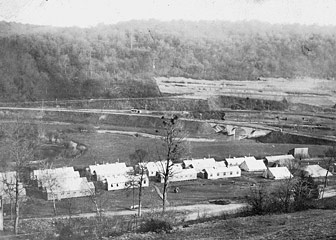
The German Red Cross ordered 80 houses for use in humanitarian crises and natural disasters. The Austrian Red Cross similarly equipped itself. The houses were used during typhoid and smallpox epidemics and served as pavilions for treating lung diseases. In 1899, the firm Christov & Unmack built the first school, followed by the expansion of prefabricated wooden structures into the education sector. The church also began using them as emergency churches and prayer halls. This was followed by outdoor schools, recreational facilities, summer residences, and residential buildings. Döcker system buildings were also used as colonial structures for transportation and mining companies. Christov & Unmack’s wooden buildings were constructed and used throughout Europe, in the colonies, in Turkey, in North American states, in Brazil, Argentina, Mexico, and Japan. During World War I, Döcker houses were used on all battlefields.
Luděk Liška, Eng.
EUROPANEL s.r.o.