

Plumbing, Sewerage, Electrical Work, HVAC, Heating
In today’s segment of the report, we’ll cover all the utilities. The house is built above ground level, and the water, sewer, and electrical connections are routed into the house from a utility shaft located beneath the house.
Water and Sewer:
In terms of layout, all rooms with sewer and water connections are arranged so that only one connection point is needed. The toilet is therefore adjacent to the bathroom, and the bathroom is adjacent to the kitchen. Similarly, the bathroom in the annex is adjacent to the main toilet, and a second kitchen unit is located on its exterior wall. Thanks to this layout, all sewer and water lines are routed through the false walls in the bathrooms and continue behind the kitchen cabinets. The false wall of the bathroom in the main wing of the house also houses the piping for the toilet in the attic. The house is equipped to accommodate four people across three generations. A bathroom with a toilet, shower, and separate kitchenette in the annex for the "guests," a separate toilet, a bathroom with a shower stall, bathtub, washing machine, and dryer, and a kitchen with a dishwasher in the main wing of the house, plus a toilet in the attic. Hot water for the annex and the bathroom and toilet on the ground floor is provided by a 100-liter boiler. Another 22-liter boiler is installed in the attic toilet and also serves the main kitchen.

Electrical wiring:
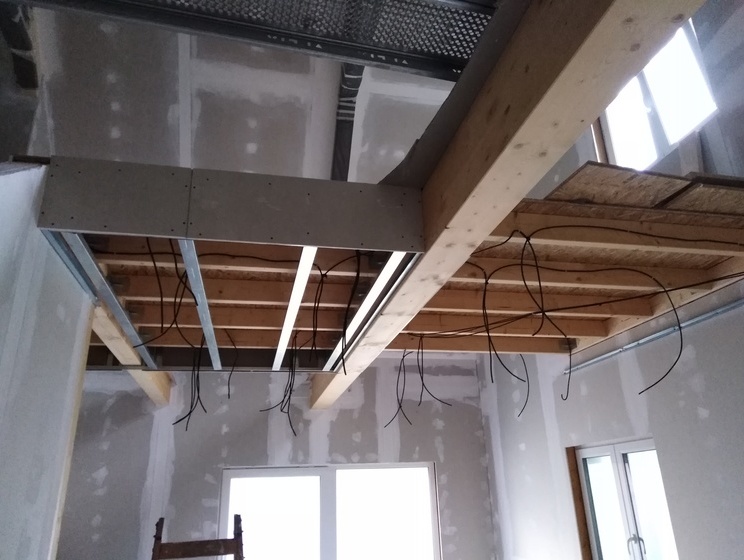
The electrical wiring is laid horizontally in the floor on the first floor and in the beam ceiling structure on the second floor. Electrical conduits in the panels are used for wiring in the walls. The distribution panel is located in a drywall partition separating the entryway and the toilet. The installation materials used must be suitable for use in combustible structures.
Ventilation:
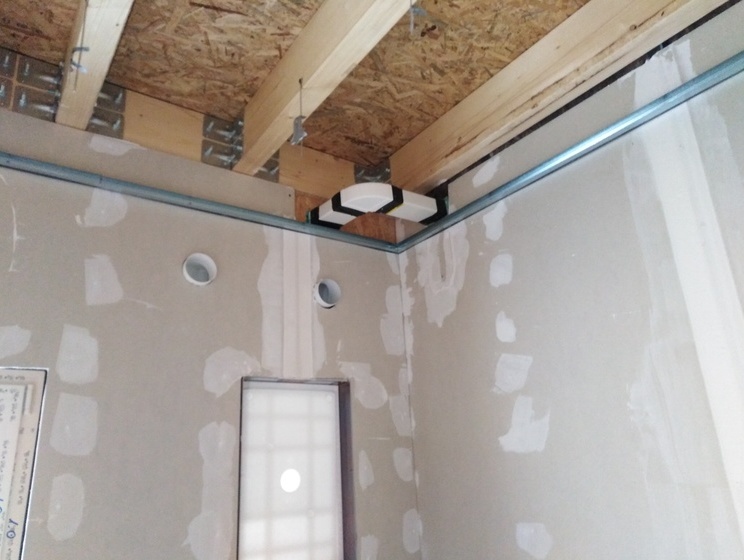
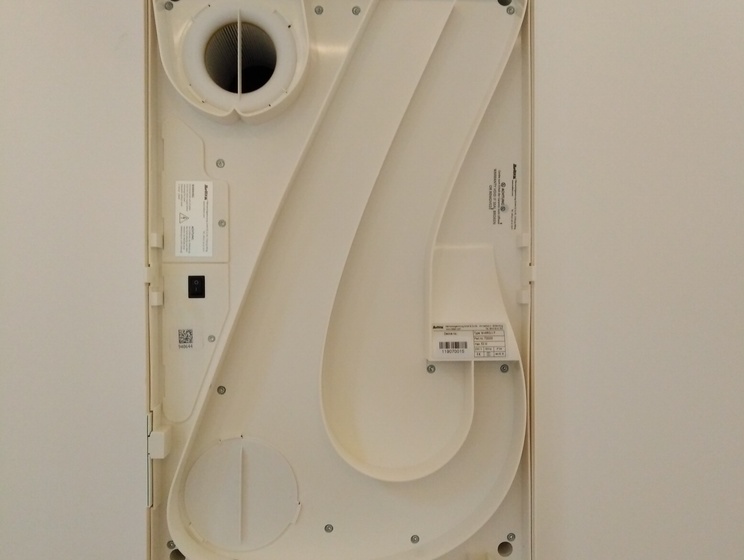
One of the basic requirements for modern construction is the airtightness of the building envelope. This is excellent from an energy-saving perspective. At the same time, however, 15 to 25 m³ of fresh air per hour must be supplied to the house per person. This can be achieved by ventilating through windows, but at the cost of losing approximately 40% of the energy used to heat the house. That is why modern homes use ventilation units with heat recovery, which ventilate the house and, thanks to a heat exchanger, save 80 to 90% of the energy. The house is equipped with three ventilation units.
Heating:
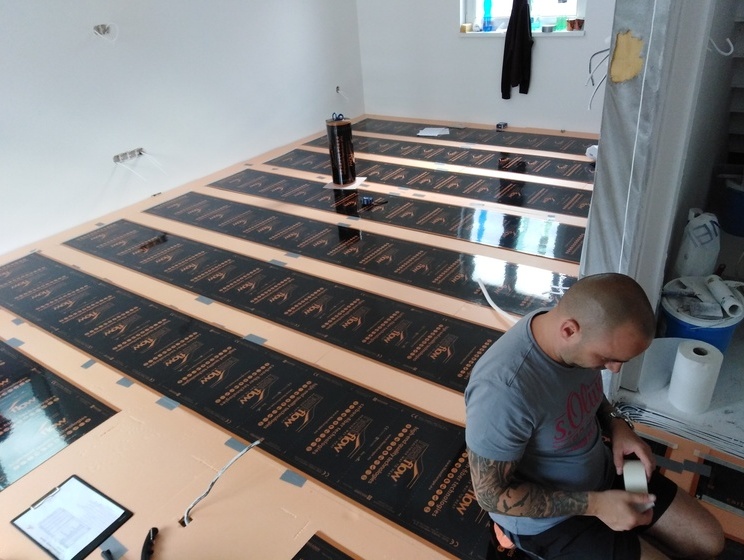
The building is heated by electric floor heating, specifically a carbon heating foil that is built into the floor structure. The house is divided into several heating zones, each with its own room thermostat.
We will complete the construction in the next installment.