

Facade, Roof, and Windows
In today’s installment of our report, we’ll set sail from the calm waters of EUROPANEL into the boundless ocean of building materials. It looks something like this: What insulation to use? What thickness for the facade? What kind of plaster? What color and texture for the plaster? What about windows—wood, plastic, aluminum? Or wood-aluminum? Double-pane or triple-pane, and what about the color? What profile, how many seals, and what U-value? And what about the roof—metal, plastic, ceramic, concrete, or bitumen? And what shape and color of tiles, and and and…? It’s just madness.
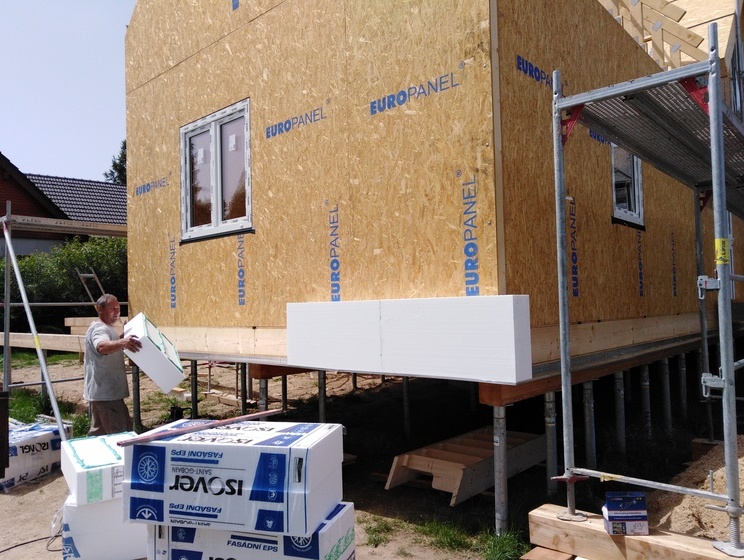
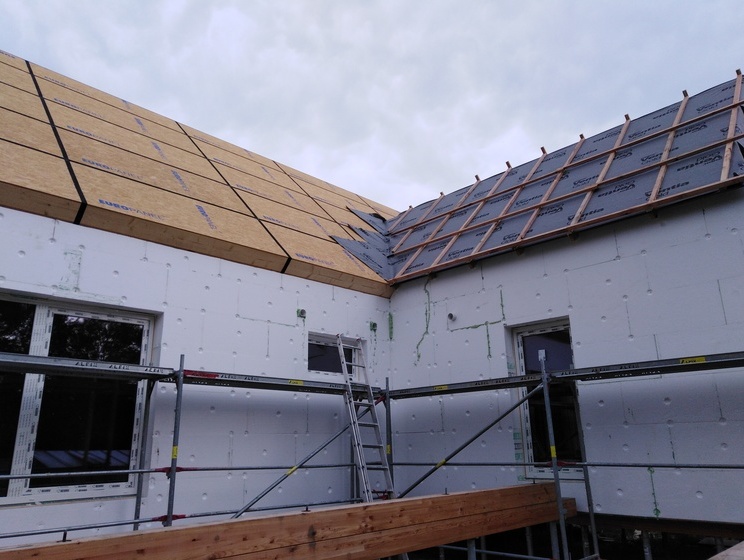
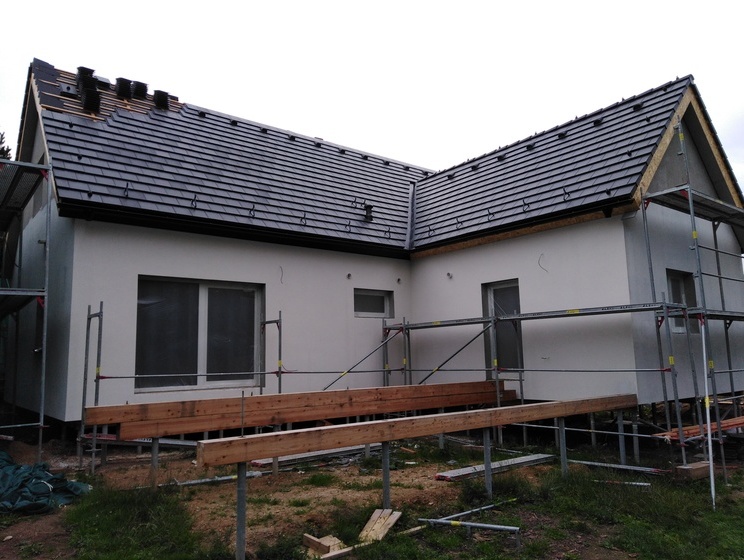
I recommend the approach “Simplicity is beauty.” Insulate the facade with polystyrene and apply an acrylic or silicone plaster with a grain size of 1 to 2 mm, and choose the color with the surrounding environment in mind, keeping in mind that the house will become part of that environment for several decades—dark blue looks nice on a car, but it might not always be the right choice for a house. For the house we are describing, a 200 mm layer of polystyrene was applied using polyurethane facade adhesive, followed by cement adhesive with a glass fiber reinforcement mesh and a 1.5 mm silicone plaster—of course, a complete certified facade system. There was no issue with the plaster color; it was specified by the Jizerské hory Protected Landscape Area. The choice of windows is a highly personal matter and subject to fashion trends. Plastic windows with triple glazing were selected. Roofing is both a technical and aesthetic consideration. Smooth concrete tiles were chosen, with the color again specified by the Protected Landscape Area.
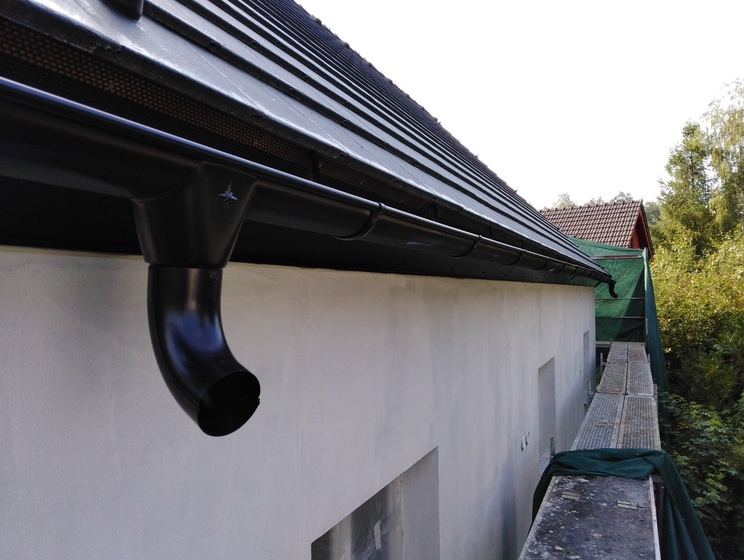
The metal flashing and the color of the gutters and downspouts were also matched to the roof color.
In the next installment, we will focus on building services.