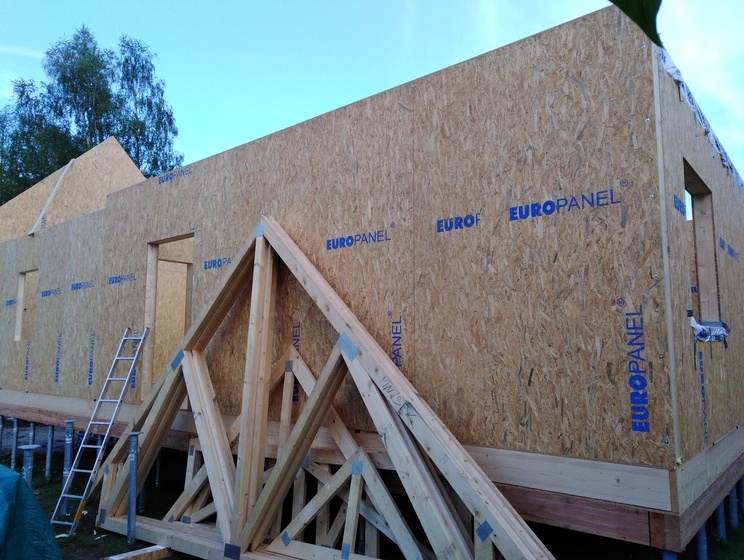
Installation of Walls and Ceilings
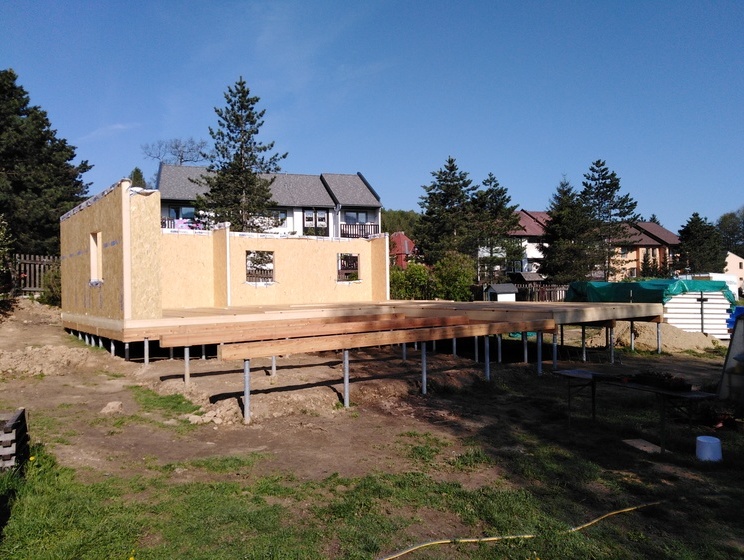
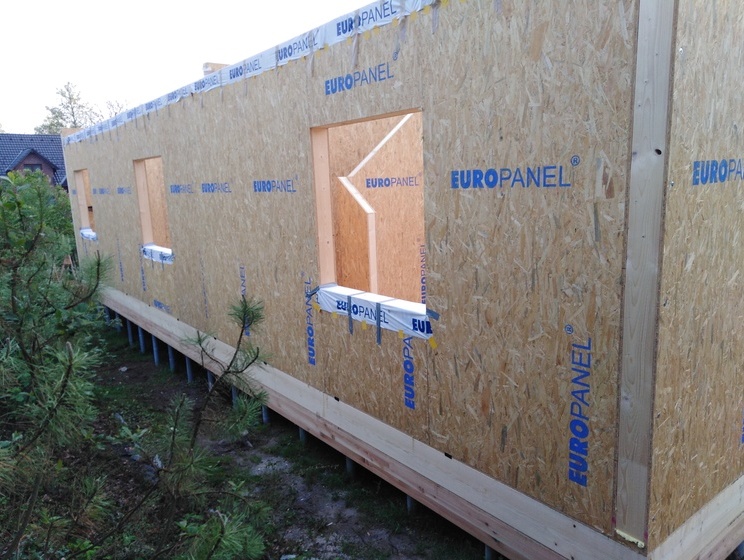
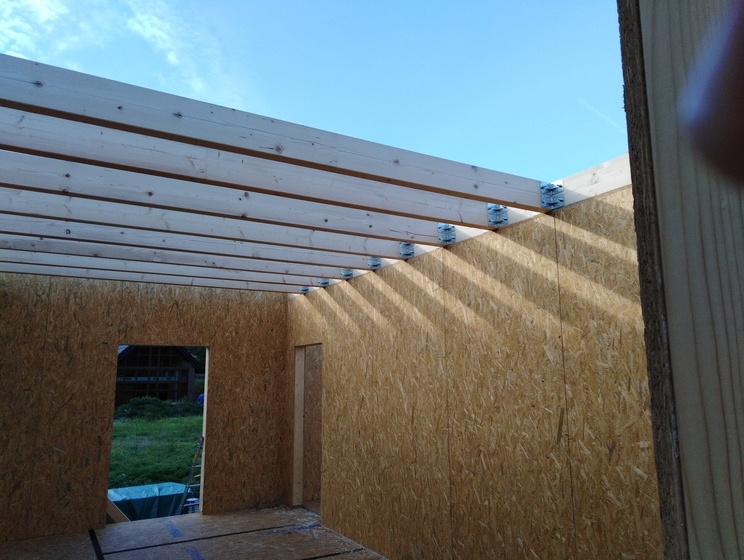
Before installing the walls, a base frame consisting of 40 mm thick wooden inserts is glued and screwed to the foundation slab. It is important to assemble the frame as precisely as possible. Wall panels for the exterior and interior load-bearing walls are then mounted onto the frame. Installation is based on the prepared installation documentation. Above all, “don’t improvise,” but perform the installation in accordance with the documentation for the specific building and the general principles described in the installation manual. Wall installation begins at the corner of the building and continues in the chosen direction. The panels are joined using standard fasteners. If stress is concentrated in a particular location—for example, due to roof loading—a column specified by the structural engineer is inserted into the walls, or the structural detail is drawn and described in the aforementioned installation documentation. Interior load-bearing walls are installed in a similar manner to exterior walls. Non-load-bearing walls are constructed of drywall. The ceiling is a beam structure covered with 22 mm thick OSB board. During wall installation, horizontal wooden joists are also installed. For example, in this building with an open layout above the living space, the main joist made of glued laminated timber has a cross-section of 200 x 320 mm.

In the next installment, we will describe the roof structure made of glued beams and trusses (yes, both are used in this house) and the panel roof.